
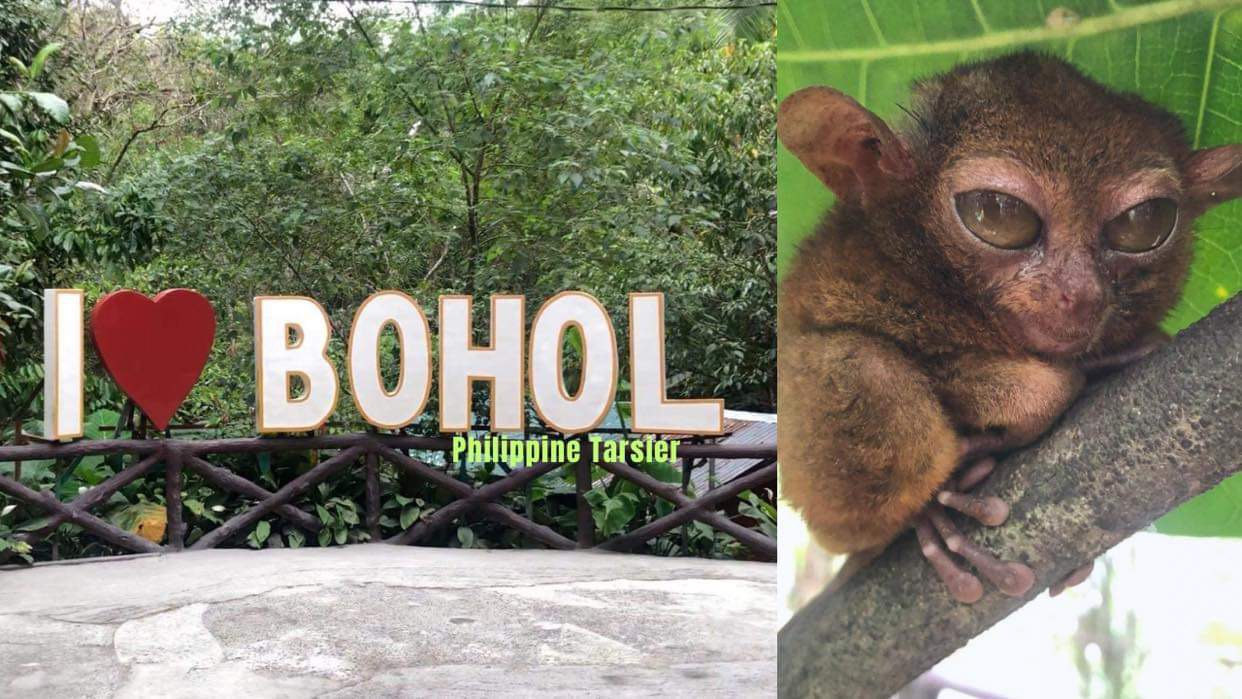
Philippine Tarsier one of the tiniest and cutest on earth
Philippine Tarsier
My recent trip to Bohol was truly amazing and fun. Although it was a short vacation, it felt incredibly fulfilling.
In just a few days, I was able to experience some of the province’s best attractions. One of the highlights was the Tarsier Conservatory—a must‑visit destination that you definitely shouldn’t miss when exploring this beautiful island.


Visiting Bohol was truly a dream come true for me. I had wanted to see this beautiful place for many years, but for various reasons, my plans were always delayed. Thankfully, this time I finally managed to make it happen.
Two of the things I looked forward to the most were seeing the Chocolate Hills and meeting one of the tiniest and most fascinating animals in the world—the Philippine tarsier.
I’m not exaggerating when I say that the moment I saw a tarsier up close, my Bohol experience felt complete. How could it not? Who wouldn’t instantly fall in love with such an adorable and delicate creature? Simply watching her quietly in her natural environment was more than enough—her cuteness and charm are truly beyond words.


Let’s get to know the Philippine Tarsier

The Philippine tarsier (Carlito syrichta), known locally as mawumag in Cebuano and other Visayan languages, and magô in Waray, is a species of tarsier endemic to the Philippines. It is found in the southeastern part of the archipelago, particularly on the islands of Bohol, Samar and Leyte. It is a member of the approximately 45-million-year-old family Tarsiidae, whose name is derived from its elongated “tarsus” or ankle bone. Formerly a member of the genus Tarsius, it is now listed as the only member of the genus Carlito, a new genus named after the conservationist Carlito Pizarras.
The Philippine Tarsier attitude
The Philippine tarsier is a shy, nocturnal animal that leads a mostly hidden life. During the day, it sleeps in dark hollows close to the ground, near tree trunks and shrubs deep in the impenetrable bushes and forests. It becomes active only at night; with its keen sight and ability to manoeuvre around trees, it is able to avoid humans.
It is arboreal,habitually clinging vertically to trees and capable of leaping from branch to branch.ttp://cloudgos.com

Share This:



 English
 Arabic
 Japanese
 Korean
 Russian
 Chinese (Simplified)
 Chinese (Traditional)
 French
 German
 Hebrew
 Greek
Greek Italian
 Portuguese
 Spanish
 Armenian
 Thai
Thai Hindi
Hindi Urdu
Urdu Polish
 Romanian
 Dutch
Dutch Czech
Czech Cebuano
 Filipino